
Dry socket is a painful condition that can happen after a tooth extraction. It occurs when the blood clot that protects the empty tooth socket becomes dislodged or does not form properly. Without this clot, the bone and nerves underneath are exposed, causing discomfort and slowing down the healing process.
Many people worry about getting dry socket after having a tooth removed, especially after wisdom tooth extraction. The good news is that there are simple steps you can take to lower the risk. Following the right aftercare instructions can make a big difference in your recovery.
In this guide, you will learn how to prevent dry socket with easy, step-by-step care tips. From eating the right foods to avoiding certain habits, these practical suggestions can help your mouth heal safely and comfortably.
Understanding Dry Socket
Dry socket is a painful dental problem that can occur after a tooth is removed. It happens when the blood clot that forms in the empty socket becomes loose or disappears too soon. This leaves the bone and nerves exposed, causing pain and discomfort.
Normally, the blood clot protects the extraction site and helps the area heal. When the clot is lost, the healing process slows down. As a result, the socket becomes more sensitive and may cause pain that spreads to the jaw, ear, or neck.
Dry socket is most common within a few days after a tooth extraction, especially after wisdom tooth removal. Although it is not a serious condition, it can be very uncomfortable. Understanding how it happens is the first step toward preventing it and supporting proper healing.
Common Causes of Dry Socket
One of the most common causes of dry socket is losing the blood clot too early. This can happen if you rinse your mouth too hard, spit forcefully, or use a straw after a tooth extraction. These actions can disturb the healing area and remove the clot.
Smoking is another major cause of dry socket. The sucking motion can dislodge the blood clot, while the chemicals in tobacco may slow down healing. People who smoke after an extraction are generally at a higher risk of developing this condition.
Poor oral hygiene and not following your dentist’s aftercare instructions can also increase the risk. In some cases, infection at the extraction site may affect healing and lead to dry socket. Taking proper care of your mouth after the procedure can help prevent these problems.
Signs and Symptoms
The most common symptom of dry socket is severe pain a few days after a tooth extraction. The pain may start suddenly and become worse over time. It can spread from the extraction site to the ear, jaw, or side of the face.
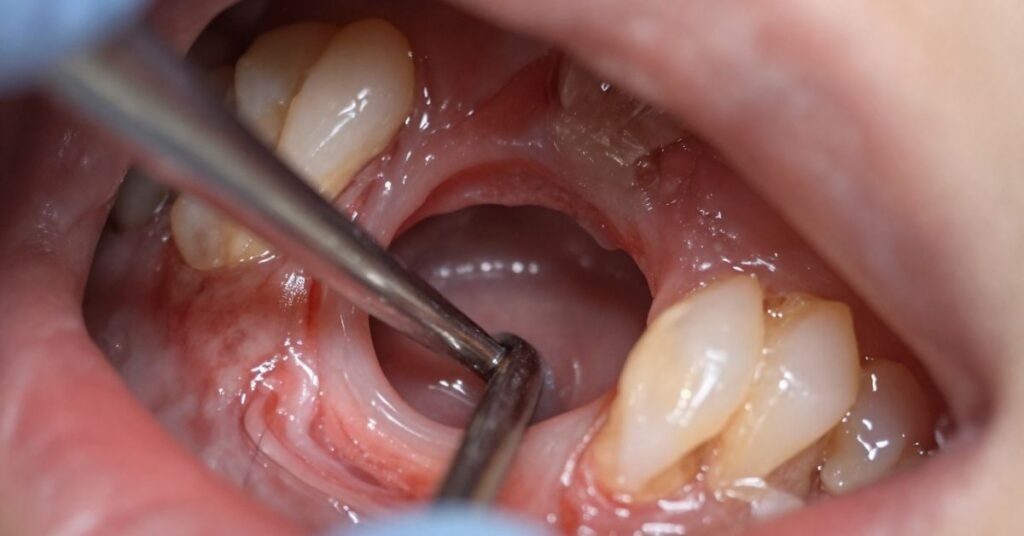
Another sign is an empty-looking socket where the blood clot is missing. In some cases, you may be able to see the bone inside the socket. The area may also appear dry instead of showing normal healing.
Many people with dry socket notice a bad taste in their mouth or unpleasant breath. The discomfort can make it difficult to eat, drink, or sleep. If these symptoms appear after an extraction, it is important to contact your dentist for advice and treatment.
Major Risk Factors
Some people have a higher risk of developing dry socket after a tooth extraction. Smoking is one of the biggest risk factors. The chemicals in tobacco can affect healing, and the sucking motion may remove the blood clot from the socket.
Poor oral hygiene can also increase the risk. If the mouth is not kept clean, bacteria may build up around the extraction site. This can interfere with healing and make complications more likely.
Certain medical conditions and medications may also play a role. For example, people who have had dry socket before may be more likely to experience it again. Difficult tooth extractions, especially wisdom tooth removal, can also raise the chances of developing dry socket.
Dry Socket Care Comparison
Proper care after a tooth extraction can greatly reduce the risk of dry socket. Small daily habits can either support healing or slow it down. Knowing what to do and what to avoid can help protect the blood clot and promote a smoother recovery.
The table below compares helpful actions with habits that may increase the risk of dry socket. Following the recommended practices can make the healing process more comfortable and successful.
| Care Area | Recommended Actions | Actions to Avoid |
| Drinking | Drink water slowly from a cup | Use straws for the first few days |
| Eating | Eat soft foods like yogurt, soup, and mashed potatoes | Eat hard, crunchy, or spicy foods |
| Oral Hygiene | Gently brush teeth and follow dentist instructions | Brush aggressively near the extraction site |
| Mouth Rinsing | Use a gentle saltwater rinse when advised | Rinse forcefully or spit hard |
| Smoking | Avoid smoking during recovery | Smoke or use tobacco products |
| Physical Activity | Rest and take it easy for the first 24–48 hours | Perform heavy exercise too soon |
| Extraction Site | Let the blood clot heal naturally | Touch the socket with fingers or tongue |
| Medication | Take prescribed medicines as directed | Skip medications or ignore instructions |
| Follow-Up Care | Contact your dentist if problems occur | Ignore severe pain or unusual symptoms |
| Hydration | Stay well hydrated throughout recovery | Drink alcohol or dehydrating beverages |
| Healing Support | Follow all aftercare guidelines | Remove or disturb the blood clot |
| Recovery Monitoring | Watch for signs of proper healing | Delay treatment if dry socket symptoms appear |
How to Prevent Dry Socket
Preventing dry socket starts with following your dentist’s aftercare instructions carefully. After a tooth extraction, the blood clot must stay in place to protect the healing area. Simple care habits can make a big difference in recovery.

Avoid smoking, using straws, or rinsing your mouth too forcefully for the first few days. Eat soft foods and chew on the opposite side of the extraction site. These small steps help keep the blood clot safe and stable.
Keep your mouth clean, but be very gentle around the healing area. Brush your teeth carefully and use any mouth rinse recommended by your dentist. If you notice unusual pain or symptoms, contact your dentist early for proper care.
Essential Aftercare Steps
After a tooth extraction, proper aftercare is very important for healing. The first step is to rest and avoid any heavy activity for at least 24 to 48 hours. This helps the blood clot stay in place and protects the socket.
You should also follow your dentist’s instructions carefully. Take any prescribed medicines on time to reduce pain and prevent infection. Eat soft foods and drink plenty of water, but avoid using a straw.
Keep your mouth clean, but be very gentle around the extraction site. Brush your teeth slowly and avoid touching the wound area. If you notice strong pain, swelling, or unusual symptoms, contact your dentist as soon as possible.
Dry Socket Do’s and Don’ts
After a tooth extraction, following the right habits can help prevent dry socket. Do rest well and give your body time to heal. Do eat soft foods like yogurt, soup, and mashed potatoes during the first few days.
Do keep your mouth clean, but be gentle while brushing near the extraction site. Do take your medicines exactly as your dentist prescribes. These small steps support healing and protect the blood clot.
Don’t smoke or use tobacco products after the procedure. Don’t use straws, rinse forcefully, or spit too hard. Don’t disturb the extraction area with your tongue or fingers, as this can slow down healing and increase the risk of dry socket.
Recovery and Healing Process
The recovery after a tooth extraction usually takes a few days to a couple of weeks. In the first 24 hours, a blood clot forms in the socket. This clot is very important for proper healing and pain protection.

During the next few days, the swelling and mild discomfort slowly start to reduce. The gum tissue begins to close over the extraction site. Eating soft foods and following aftercare instructions helps speed up this process.
Full healing takes more time, depending on the tooth and your health. Wisdom tooth extractions may take longer to heal than simple ones. If you follow proper care, the recovery becomes smoother and less painful.
Conclusion
Dry socket can be painful, but it is mostly preventable. Simple care steps after a tooth extraction can protect the blood clot and support fast healing. Following your dentist’s advice is the most important part of recovery.
Good oral care, avoiding smoking, and being gentle with your mouth can make a big difference. If you take proper precautions, your healing process will be smoother and more comfortable. Always contact your dentist if you notice unusual pain or symptoms.
FAQs
1. What is dry socket?
Dry socket is a painful condition that happens after a tooth extraction when the blood clot is lost or does not form properly.
2. When does dry socket usually happen?
It usually occurs 2 to 5 days after a tooth is removed.
3. How can I reduce the risk of dry socket?
Follow your dentist’s instructions, avoid smoking, and do not use straws after extraction.
4. Is dry socket dangerous?
No, it is not dangerous, but it can be very painful and needs dental treatment.
5. How is dry socket treated?
A dentist cleans the area and may place a medicated dressing to reduce pain and help healing.
No Responses